


Table of Contents
Quick Take: Baseline Metrics
- Winter Temperatures Vary Widely: Nordic winters range from around 0°C in Denmark and coastal Norway to -30°C in parts of Finland and Iceland.
- Snow, Darkness, and Adventure: Short daylight hours, snowy landscapes, and world-famous winter sports define the Nordic winter experience.
- Preparation Is Everything: Layered wool clothing, waterproof outerwear, insulated boots, and winter accessories are essential for comfort and safety.
#TL;DR Highlights
- The Nordic countries Denmark, Norway, Sweden, Finland, and Icelandare famous for their breathtaking winter landscapes, unique culture, and progressive societies.
- Winters in these countries can be extremely cold, with temperatures often dropping below freezing, but each country experiences winter differently.
- Despite the chill, Nordic winters offer a magical experience with snowy adventures, winter sports, and vibrant local traditions.
- Proper winter clothing and preparation are essential for international students and travelers to stay comfortable and enjoy the season.
- Nordic countries are top study abroad destinations in 2026, offering world-class education, student-friendly environments, and high quality of life.
#Introduction About Nordic Countries
Nordic Countries are located within the northern region of Northern Europe and the North Atlantic. The term Nordic comes from the local word Norden, which means northern islands. The locals ofThe locals of the Nordic region are called Norbdo, which means northern dwellers.
#Culture And Beauty
Nordic countries indeed paint a beautiful picture. Sun-Kissed beaches and spectacular mountain ranges engulf the region. It is home to distinct flora and fauna.
The Nordic Countries are made up of the following Denmark, Norway, Sweden, Finland, and Iceland. The region also consists of Faroe Island, Greenland, and Aland. These countries have a lot in common, including history, political background, religion, and living. These countries are known for being peaceful and socially progressive.

#Weather In Nordic Countries
Summer ( late May to early September ) is usually the travel season in most countries as the weather is always mild and pleasant. The snowy winter offers an exotic experience to travelers. Winters in these countries are mostly cold, which allows the countries to host winter sports.
Spring brings to life everything that the region has to offer. During this, the beauty of the area is at its best. It gives several opportunities for the citizens to step out of their doors and explore places.
#Winters In Nordic Region
It’s not wrong to assume that the regions’ winters tend to get extremely cold and little to no sunlight. However, the temperature varies from one country to another. Here is an overview of how the winters feel like in the Nordic countries.
Denmark
The average temperature in Denmark in the winter months ( January and February) varies between -2 C (28 F) and four C (39 F). The smaller islands and the western coast experience slightly milder winters. The season usually witnesses heavy rainfall, shorter days, and harsh winds.
Sweden
Sweden is a vast country, and the temperatures differ to a great extent depending upon the area. The weather is about 0 C (32 F) in January and February in the far south and around -1.5 C (29 F) in Stockholm, while it’s around -10 C (14 F) in the north-central part and -15 C (5 F) in the northern region.During winters, Sweden is usually covered in snow except for the Southern region.
Finland
The Winter season lasts the longest in Finland. It lasts for about five months. The onset of winter begins in Lapland in mid-October and by November, in the whole of Finland. The average temperature remains slightly below 0C. The region is also subjected to heavy rainfall, cold winds, and shorter days.
Norway
The climate of Norway is affected by the Gulf Stream, so the temperature is comparatively higher than the other parts of the region. It is coldest from mid-November till January. The temperatures, however, vary depending upon different areas. The temperature in the coastal region usually remains steady at 0C. Inland, the weather can get slightly lower, ranging from 10C – 20C. Norway sees an influx of tourists during this season who want to enjoy winter sports.
Iceland
Like Norway, Iceland experiences relatively milder winters. The climate here is affected by warm currents of the North Atlantic Gyre, making it comparatively warmer. The mean temperature in the southern parts remains around 0 C (32 F). The weather in the northern part touches -10 C (14 F). The lowest temperature in Iceland ranges from -25 to -30 C, depending upon the area.
Iceland gets a fair share of sunlight even during winter, allowing the locals and the traveler to engage in various sports activities. The popular activities include skiing, Snowbowl, dog sledding, among others.
#What to wear during winters ?
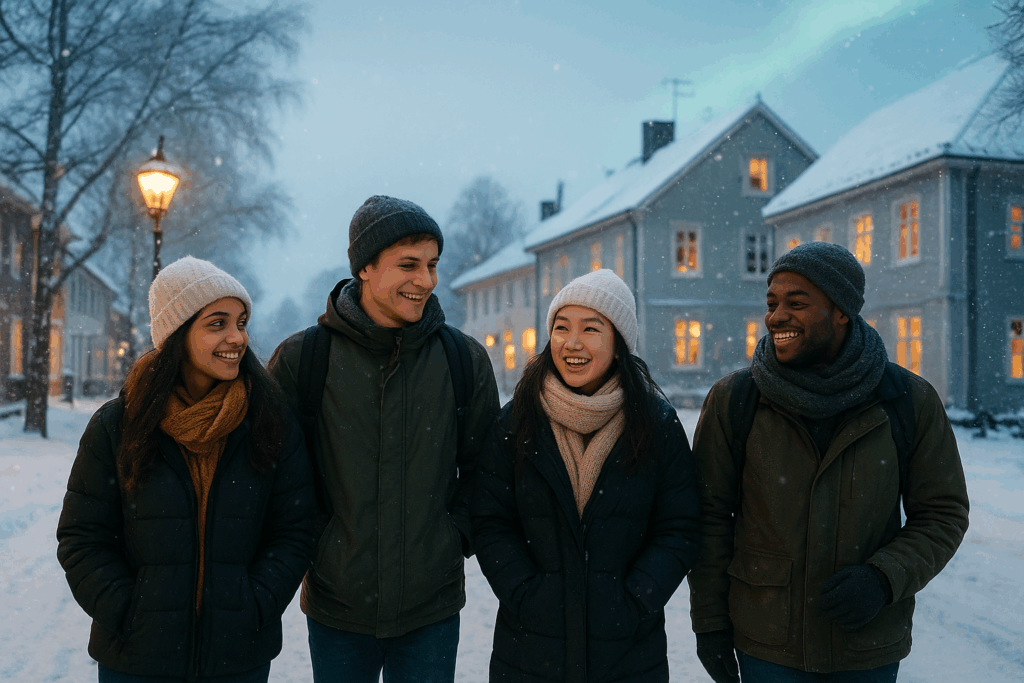
The winters in the Nordic countries are quite cold, but with the right kind of packing, you can enjoy the chilly winters and maybe engage in fun snow activities. It is advised that one carries woolen clothing instead of any other type. Taking a woolen jacket is a must. It is also useful to keep waterproof and windproof clothes handy as the region also witnesses heavy rainfall and cold winds.
The ground is covered in snow during the winter months and makes the surface quite slippery. One must carry good winter shoes which have a good grip. The boots should be warm and waterproof. Snow spikers, stabilizers are used by many to accessorize the shoes to maintain a better grip.
It would help if you carried warm hats, scarves, gloves, and woolen socks to keep yourself warm.
#Author’s Takeaways:
- Nordic winters are cold but beautiful: Expect temperatures ranging from -2C to -30C, with heavy snowfall and limited daylight, perfect for winter sports and cozy cultural experiences. Learn more about studying in Sweden or living in Denmark as an international student.
- Each country has its own winter vibe: Denmark and Iceland enjoy milder winters due to ocean currents, while northern Sweden and Finland can get extremely cold and snowy, especially in Lapland.
- Dress smart for the weather: Pack woolen layers, waterproof jackets, sturdy boots, and winter accessories (hats, scarves, gloves) to stay warm and safe during your Nordic adventure.
- Nordic countries are trending for study abroad in 2026: Students are choosing these destinations for their affordable tuition, safe societies, and innovative education systems. Explore top study abroad trends for 2026.
#FAQs
Submit the form we will reply within Next 24 hours
Grad-Dreams Updates
Stay connected and get the latest updates by following us on our social media channels

Develop Must-Have Skills To Navigate Workplace Challenges And Build Executive Presence
Explore Topics
- Application Process & Admissions (3)
- Admissions (1)
- Essays (1)
- LOR (0)
- Online Applications (1)
- SOP (0)
- Coaching & Test Preparation (6)
- Degree Specific Guides (46)
- Lifestyle & Cultural Adaptation (12)
- Programs & Courses (36)
- Artifical Intelligence (0)
- Arts (16)
- Computer Science (1)
- Engineering (6)
- Hospitality (3)
- Information Technology (4)
- Law (1)
- Medicine (4)
- Student Origin Cities (21)
- Study Abroad Destination Countries (46)
- Australia (1)
- Canada (2)
- Denmark (1)
- Europe (11)
- Finland (2)
- France (3)
- Germany (0)
- Ireland (3)
- Japan (3)
- korea (1)
- Netherlands (2)
- New Zealand (3)
- Spain (1)
- Sweden (1)
- Switzerland (2)
- Turkey (1)
- Uk (1)
- University (0)
- USA (8)
- Study Abroad Finance (19)
- Education Loan (0)
- Financial Aid (5)
- Scholarships (14)
- Trending Topics (32)
- Business (3)
- Career (15)
- Healthcare (3)
- Immigration (0)
- Internships (1)
- Jobs (1)
- Science (7)
- Technology (2)
- Uncategorized (0)
- Visa and Immigration Guidance (3)
Related Topics
Qatar Scholarship Expats: Expansion of What it Means

The Continental Europe English-Taught Edge